I’m linking
an article about a so-called problematic scene in the movie Boyhood. Please read the AV article,
here, before you continue with mine. If you’re not familiar with the movie you can google it, but I recommend seeing it. See the trailer
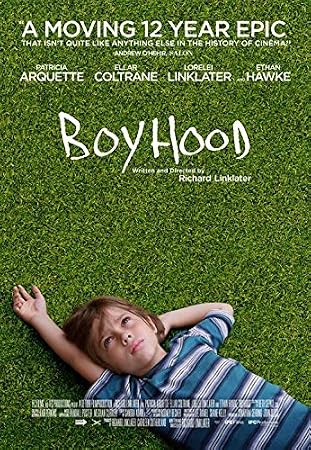
here, including rating information. It’s an enjoyable, but rather low-key drama, quite novel in that it was filmed very gradually, with the same actors over a period of 12 years. It has a very natural and organic quality to it as it focuses primarily on the main character, a boy, and his mom, sister and dad - in that order.
The author of the AV article raises a point that is worth exploring, however, I want to consider it from another angle.
What if that scene was taken from a colorblind point of view? What if that of-the-cuff teacherly advice given to a young laborer who was repairing something at the teacher’s home were given by a teacher of any race to a “student/laborer” of any race? It’s typical advice about going to school and bettering oneself. The AV article characterizes the scene as having a
...cringeworthy white-savior aspect.
I have to disagree that it's ingrained racism or colonialism - it's simply a preachy teacher not unlike thousands of other real-life teachers and coaches who evangelize their
education/betterment message. While it is not the theme of this movie, it is the main theme of dozens of other movies from
To Sir With Love to
Stand and Deliver. That particular scene is nothing more and nothing less that a teacher doing her thing and trying to promote education.
The movie is set in Texas, I live in Florida, both places with great population diversity, it is not unusual for a young person of any race or socioeconomic background, for that matter, to work such a job. Even many "rich white kids" work such jobs during the summer. Maybe it's a family business. I believe it’s more about blue-collar work versus white collar work. I think it is unnecessary to make any notation of race in this scene and in this movie. The entire movie is meant to be an intimate look into a few particular people’s lives.
The other dimension of the AV article’s criticism centered on the scene set many years later, when we see the interactions between the advice-giving teacher, the advice taking [former]laborer, and the children of the teacher. The later scene does play awkward - as the AV article notes. The student/laborer’s testimony is not much of a big deal to the teacher/mom’s young adult children - they do not register much about it at all! I find that to be a truly a natural reaction. The Bible says “A prophet is not without honor, except in his own home,” and I’d wager the same for a teacher, or anyone really, in the eyes of their own teenaged or young adult children. Sure, it served as a set up for the mom's final scene, it rang very true for me. The AV article noted the teacher/mom appeared to be only be a bit more affected than her children by the young man’s testimony of her positive influence. While awkward, it does also strike me as natural - that an accidental meeting and declaration of such kind, particularly out-of-context and during a family dinner in public, would play that way. If the young man sought her out on campus in her office or classroom, or even in her home, it could have engendered a different reaction. The AV article seems to be saying that these things are insensitive and a form of racism. That the mom/teacher's influence of the young laborer was not dully noted by her and her children, nor was he more than a blip on their radar seems rather typical of a stranger that one sees only twice in a dozen years.
There are probably people who have been kind to you or I over the years, who did something special for us, that would register similarly. The stranger who gave you a ride when you were broke down on the side of the road, the manager you worked for as a teen that gave you a nugget of wise advice that stayed with you all your life and served a good purpose. (Heck, I even wrote about a similar offhand remark having a profound impact on me,
here.) It’s not prejudicial that we may no longer remember their names - it’s life. Typical stuff that happens to every one of us, and that is what this movie was about - all the natural, mundane aspects of our lives as we move and grow in various ways, and the cumulative effect they have.